Lower operational energy demand
A coordinated envelope and efficient systems can reduce heating and cooling needs. Renewable energy complements an appropriate building concept.

In Germany, sustainable building combines environmental quality with long-term usability. The benefits achieved depend on the location, design, construction and operation of each project.
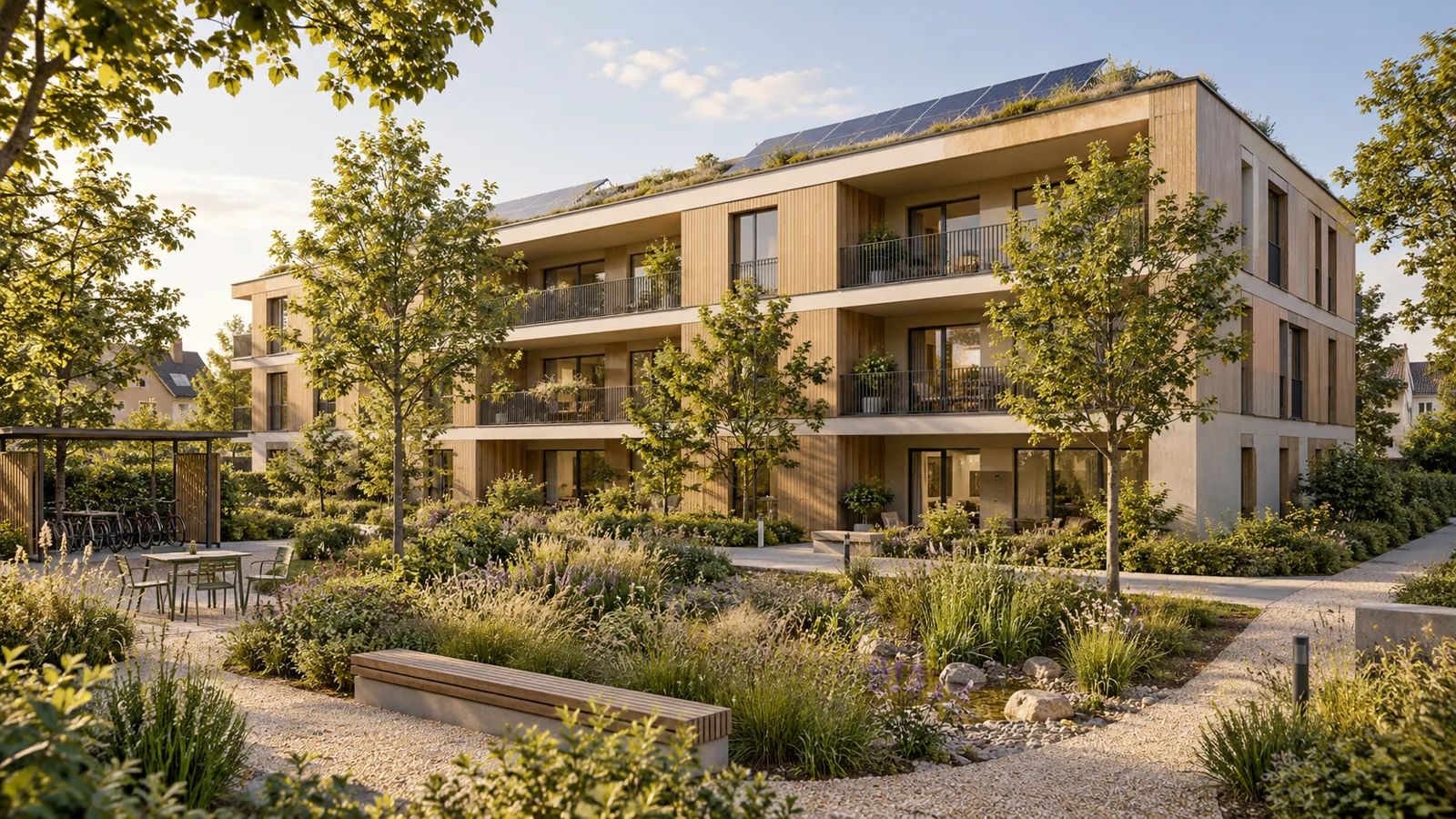
A coordinated envelope and efficient systems can reduce heating and cooling needs. Renewable energy complements an appropriate building concept.
Renovation, adaptive reuse and considered material choices can limit demand for new resources. The right solution is assessed building by building.
Daylight, indoor air, acoustics and protection from summer heat form part of holistic design. They support comfort and the quality of everyday use.
Adaptable layouts, accessible services and maintainable components help buildings respond to changing needs.
DGNB and QNG provide structured requirements and evidence. They make intended quality assessable; certification must be demonstrated separately.
KfW programmes can support climate-friendly projects. Current conditions, the required evidence and application timing determine eligibility.
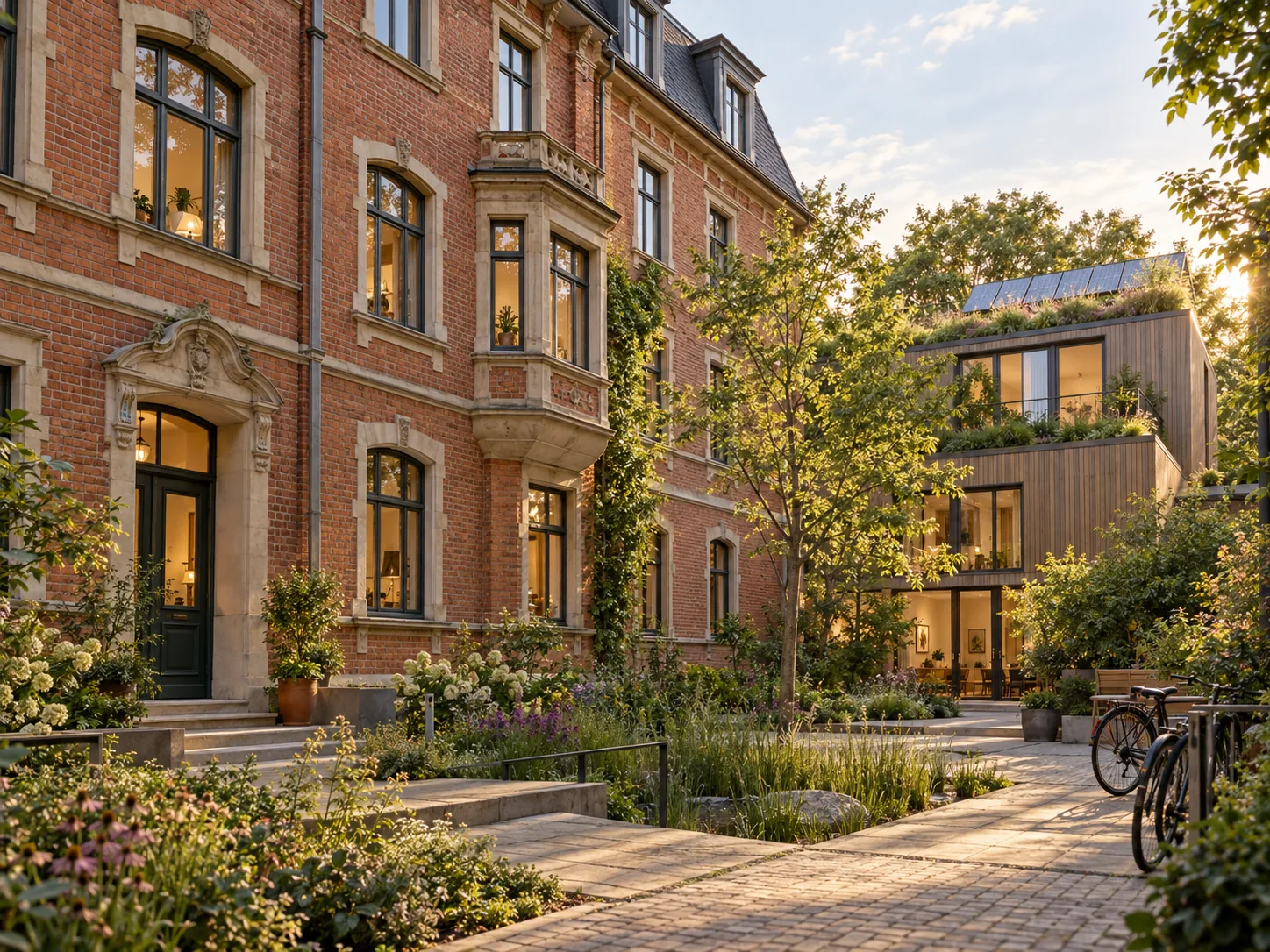
Sustainable construction starts with the right questions. What can we preserve? What use suits this place? How can we use energy and materials more thoughtfully? NEOKEEN brings together development, new construction and renovation. Together with project partners, we consider a building beyond completion: in everyday use, through changing needs and towards its future reuse.
Assess existing structures, identify opportunities and give established spaces a new purpose.
Plan the envelope, building systems and use together to limit operational energy demand.
Bring materials, maintenance, adaptability and eventual dismantling into the design from the outset.
NEOKEEN is a member of the German Sustainable Building Council, DGNB e. V. Membership supports professional exchange. It does not replace certification of an individual building.


Different tax provisions may be relevant depending on the intended use and project. Statutory requirements and the individual tax situation are decisive.
Section 7(5a) EStG permits annual depreciation of 5% of the remaining value for eligible new residential buildings. The relevant construction-start or purchase-contract window is 1 October 2023 to 30 September 2029. An acquisition must take place no later than the end of the year of completion.
Legal basis ↗Section 7b EStG provides up to 5% annual special depreciation, in addition to building depreciation, in the acquisition or construction year and the following three years. The current eligibility window requires, among other conditions, EH 40 NH with QNG, cost and assessment limits, and ten years of paid residential letting. In the current eligibility window, the building application or building notice must fall between 1 January 2023 and 30 September 2029.
Legal basis ↗Section 35c EStG may allow a 20% tax reduction over three years for eligible energy improvements to owner-occupied buildings more than ten years old. A specialist-contractor certificate and statutory evidence are required. The same measure cannot receive publicly subsidised interest-rate loans or grants. Statutory caps apply. The same expenditure cannot also receive another tax deduction or relief.
Legal basis ↗General information as of 28 October 2026. Please review project-specific conditions and combinations with a tax adviser.
We consider energy, materials, use and the life cycle together. Appropriate measures are developed for the specific circumstances of each project.
Preservation and reuse can conserve resources. Whether renovation, extension or new construction is more appropriate depends on the structure, use, energy demand and life-cycle assessment.
No. NEOKEEN’s DGNB membership is separate from building certification. Project standards and any certification status must be established through the relevant project evidence.
Depending on the project, funding programmes and tax provisions may apply. Conditions, timing and possible combinations should be checked before making binding plans.
A plot, an existing building or a specific project idea: let us explore the possibilities together.